Spray Foam Insulation in Kensington Market, ON
Insulation for the Victorian row houses, shopfronts and front extensions in Kensington Market.
We install spray foam insulation in Kensington Market, in the Victorian row houses along Wales Avenue and in the buildings that have a shop at the front. Our crew is about 3 km away. The M5T postal area we cover here also includes Chinatown and Grange Park.
Victorian row houses from the 1880s
A lot of the housing in Kensington Market is moderate-sized Victorian row houses, built on small plots in the 1880s, and many of them still stand along Wales Avenue. Kensington Market was designated a National Historic Site of Canada in November 2006. Insulating these houses means working with what is already there.
A row house loses heat through fewer surfaces than a detached house. If you share party walls with neighbours on both sides, only the front, the back, the roof and the basement face outside. That is where the heat goes, so that is where the insulation goes. The party walls sit between two heated homes and rarely need anything.
Each of those surfaces needs a different method. A front or back wall with a closed cavity can be dense-packed through small holes, which we patch afterwards. A rim joist, the band of framing where the floor joists meet the foundation, takes closed-cell foam sprayed into each bay. We look at all four before suggesting spray foam insulation or a blown-in material. Two row houses on the same street can have been changed in very different ways over the years.
Shopfronts and front extensions
Closer to the market, houses tend to have a shop at the front, and many buildings have extensions built onto the front. We treat an extension as a separate piece of building and insulate it that way.
If your front extension has its own flat roof and its own floor, with no attic above and no basement below, the insulation in the main house does nothing for it. The roof needs its own layer, either sprayed on the underside of the deck or added from above when the roof is redone. Our page on flat roof insulation explains both. The floor needs a layer too, if we can reach the framing under it.
The seam where the extension meets the original front wall is worth checking on its own. If that joint was never sealed, cold air comes through it into the shop or front room, and no amount of roof insulation will stop that. Closed-cell foam fills a gap like that and stays put.
Spray foam also needs the room empty while it goes on and while it cures. If there is a shop at the front, the work has to fit around the hours it is closed, and we settle that with you before anything is booked.
Getting materials in on narrow streets
The streets in Kensington Market are narrow, and driving and parking there are hard. That matters for a foam job because spray foam comes from a rig: a heated pump, two drums of chemical and long heated hoses, usually mounted in a truck or trailer.
The rig parks wherever it can and the hoses run in from there, through a door or window to wherever the foam is going. Blown-in insulation is similar, with a machine outside feeding the material through a hose. When we come to look at the house before quoting, we also look at where a truck could stand and how far the hoses would need to reach. We don't promise a spot on the street. Nobody can.
Close by: Christie, The Annex and Church and Wellesley
Kensington Market is close to several other neighbourhoods we work in. If you live nearby, see our pages for Christie, The Annex and Church and Wellesley. Each one covers what is particular about the homes and streets there.
Row houses on the same street can have been changed in very different ways, so each one gets its own plan.
Local details for Kensington Market
- Postal codes: M5T
- Distance: About 3 km away in a straight line
- Permit rules: toronto.ca
- Nearby: Christie, The Annex, Church and Wellesley
About Kensington Market: Kensington Market, ON on Wikipedia · Kensington Market on Google Maps
FAQ
Insulation questions from Kensington Market
We insulate a Victorian row house at the four surfaces that face outside: the front wall, the back wall, the roof and the basement. The side walls are usually party walls shared with the neighbours, so little heat goes through them. Closed wall cavities can be dense-packed through small holes, and closed-cell spray foam goes on the rim joist.
Yes, a front extension can be insulated with spray foam if the underside of its roof and floor can be reached. We treat it as its own job, separate from the main house, because it shares no attic or basement with the rest of the building. The joint where it meets the original front wall should be sealed at the same time.
No, the city does not require a building permit to add or replace insulation in a Kensington Market house. The work still has to meet the Zoning Bylaw. If the insulation is part of a bigger renovation, that work may need its own permit.
Services
Services in Kensington Market, ON
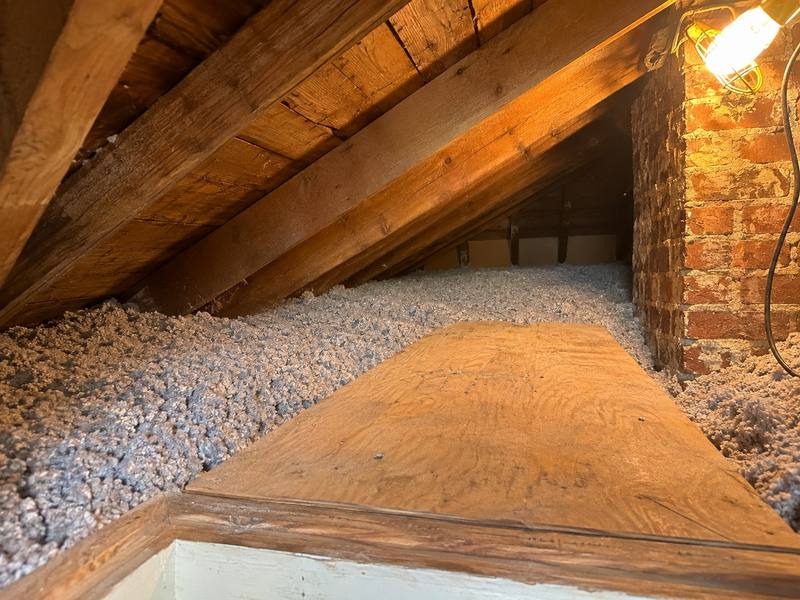
Attic Insulation
Learn more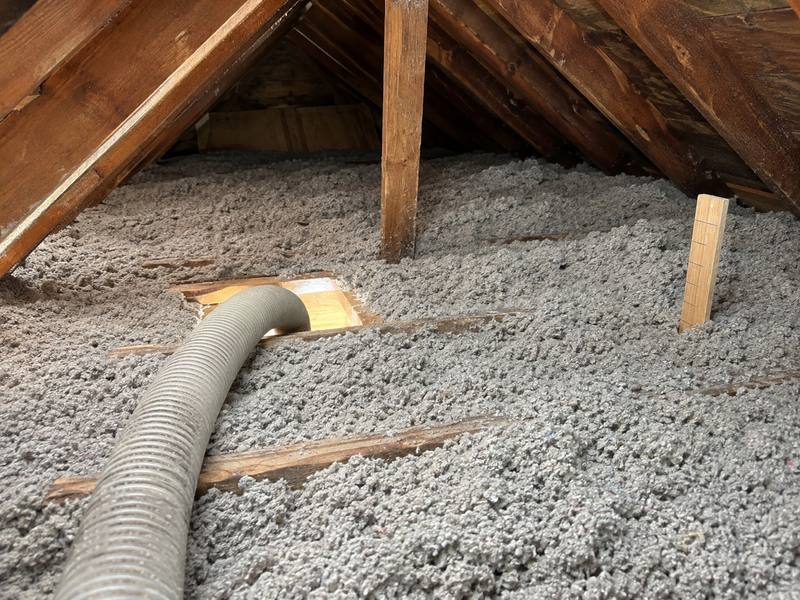
Loose-Fill (Blown-In) Insulation
Learn more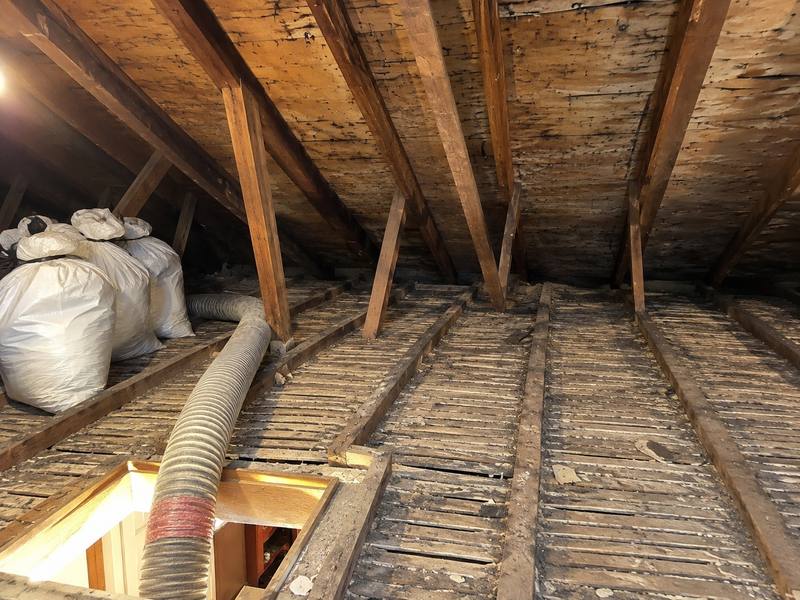
Old Insulation Removal
Learn more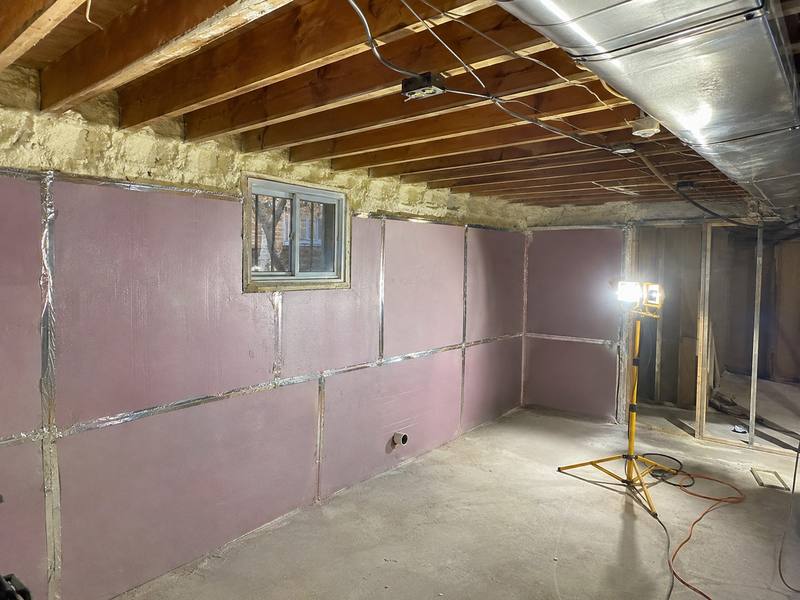
Basement Insulation
Learn more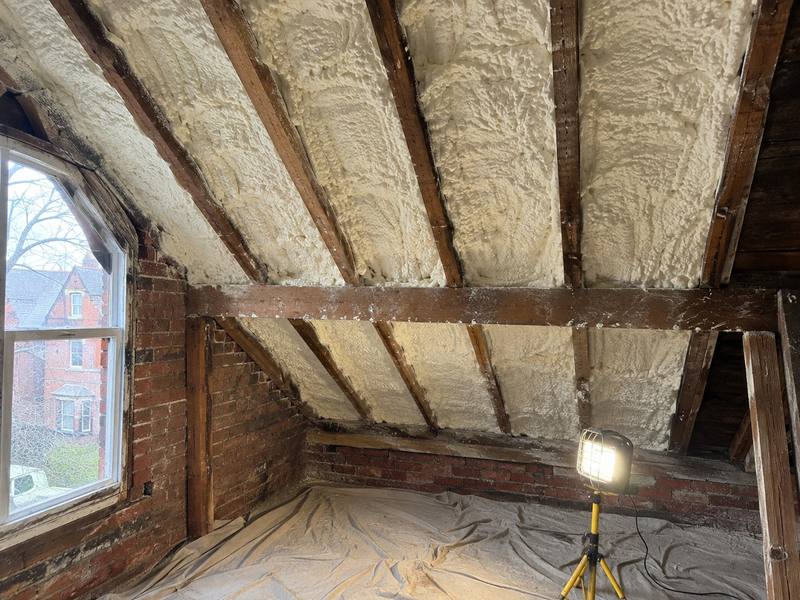
Roof & Flat Roof Insulation
Learn more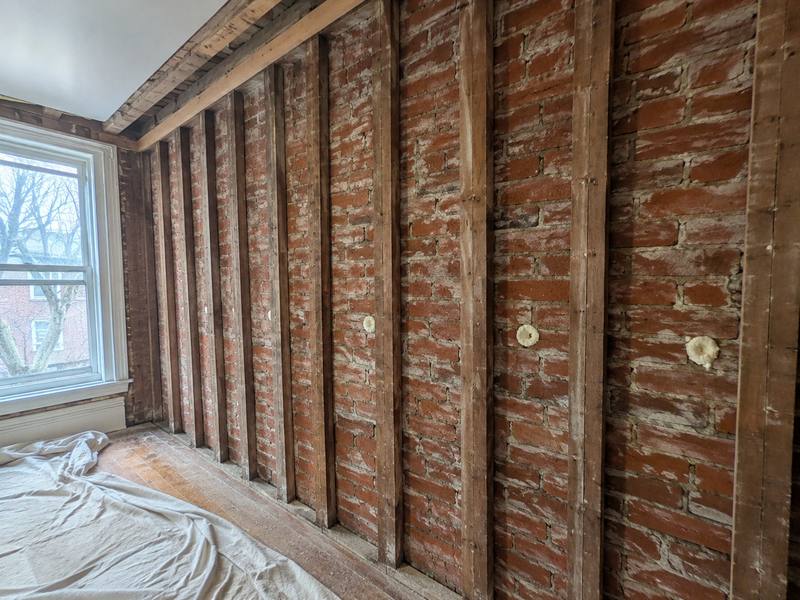
Wall Insulation
Learn more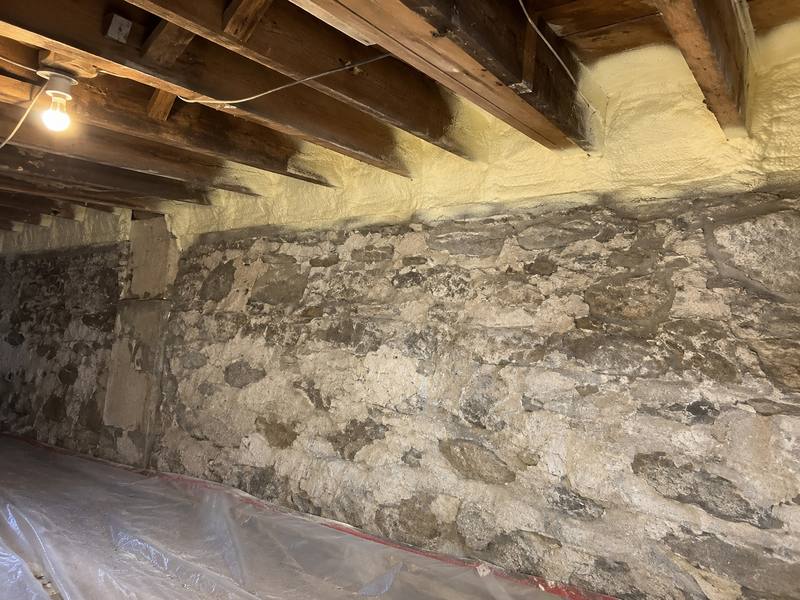
Closed-Cell Spray Foam
Learn more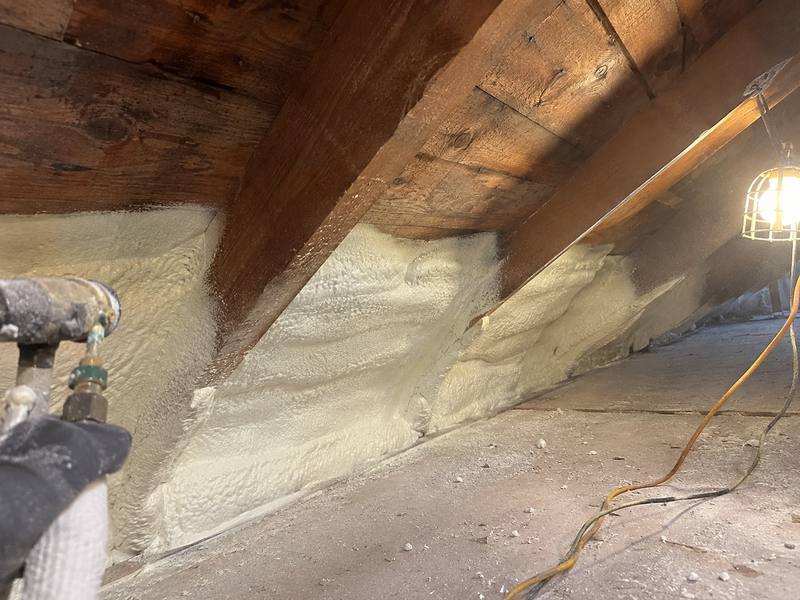
Open-Cell Spray Foam
Learn more
Spray Foam Insulation Cost
Learn more
Get a Quote
Request an insulation visit in Kensington Market
Tell us the address and which part of the house bothers you, whether that is a cold top floor, a drafty basement or a ceiling with no attic above it. Phone or use the form. We'll set up a time to look at the house, then give you a written quote.