Spray Foam Insulation in Humewood-Cedarvale, ON
Insulation for Humewood's 1920s houses and Cedarvale's 1940s homes, worked out one part of the house at a time.
We install spray foam insulation in Humewood-Cedarvale homes, about 4 km from us. The neighbourhood has 1920s houses in Humewood and modest 1940s homes in Cedarvale, and they don't need the same work.
Humewood houses from the 1920s
Vaughan Road and the Cedarvale Ravine divide Humewood from Cedarvale, in the area between Bathurst Street, Eglinton Avenue, Arlington Avenue and St. Clair Avenue. Humewood is the part south of Vaughan Road and the ravine. It has single-family homes from the 1920s and a lot of mid-rise and high-rise buildings. Our work is in the houses.
We look at a house that age part by part rather than as one job. If it has been re-insulated here and there over the decades, the rim joists, the walls and the attic can each be in a different state, and each one needs its own answer.
The rim joist caps the ends of the floor joists where they land on the foundation. If yours is exposed from the basement, we spray closed-cell foam straight onto the wood. The foam bonds to the framing and fills every seam. That work comes under our basement insulation service. Walls come next: if the cavities are open, we dense-pack them through small holes and patch the holes afterwards. The attic is last, and what goes up there depends on how much room the roof leaves.
Cedarvale's modest 1940s homes
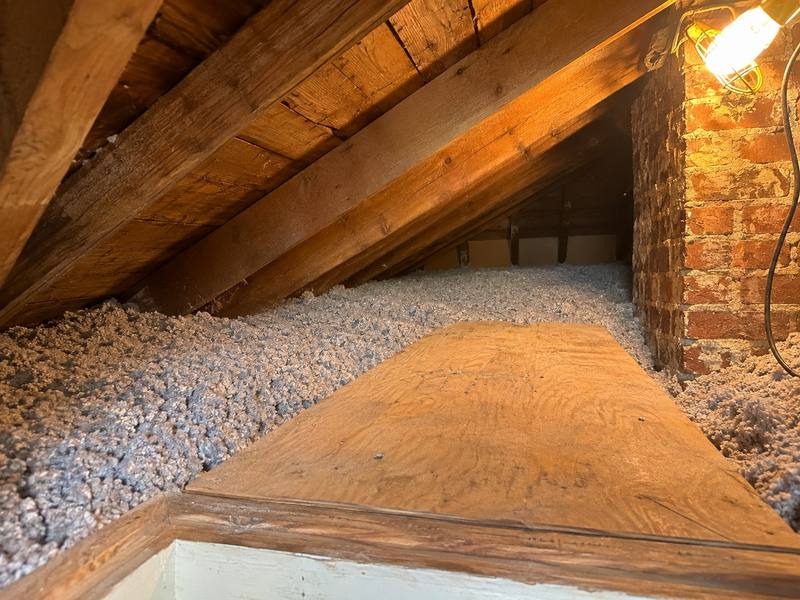
Cedarvale includes modest single-family homes from the 1940s. On a full two-storey house with an open attic above the top-floor ceiling, the simplest fix is loose-fill cellulose or fibreglass blown across the attic floor. Blown insulation settles in around joists, wiring and junction boxes, and we can build it up to whatever depth the house needs. Our attic insulation page goes through the materials and depths.
A storey-and-a-half house is different. The upstairs rooms sit partly inside the roof, so the house has knee walls (the short walls under the slope) with small unheated spaces behind them and sloped ceilings above.
Why foam fits the knee walls
Spray foam sticks to the framing and fills the space, and that matters here because blown insulation has nowhere to sit on a sloped ceiling and the narrow cavities are hard to fill evenly by hand. Open-cell foam fills the whole cavity and stops air moving through it. Closed-cell gives more insulation per inch, which counts where the rafters only leave a shallow space. So in a house laid out like this, the flat attic and the knee walls can end up with two different materials, each one used where it works.
Houses facing the ravine
Some Cedarvale homes face the Cedarvale Ravine. If your house is open to the wind on one side, that side loses more heat through air leaks. Wind pushes cold air in through gaps at the sill plate, around window frames and wherever pipes and wires pass through the walls, and warm air escapes higher up.
Adding insulation without sealing those gaps leaves the draft where it was, so on a house like this we seal first. We foam the rim joist, close the penetrations and seal around chimneys and plumbing stacks in the attic. With the leaks closed, spray foam insulation in the exposed walls and ceilings can hold up against the wind instead of letting it through. The sheltered sides of the same house may need much less.
Close by: Forest Hill, Caledonia-Fairbanks and The Annex
We also work in the nearest neighbourhoods, Forest Hill, Caledonia-Fairbanks and The Annex. Each has its own page on the houses there and the insulation work that suits them.
Local details for Humewood-Cedarvale
- Postal codes: M6C
- Distance: About 4 km away in a straight line
- Permit rules: toronto.ca
- Nearby: Forest Hill, Caledonia-Fairbanks, The Annex
About Humewood-Cedarvale: Humewood-Cedarvale, ON on Wikipedia · Humewood-Cedarvale on Google Maps
FAQ
Insulation questions from Humewood-Cedarvale
We insulate a 1920s Humewood house one part at a time: closed-cell spray foam at the rim joists, dense-pack in the walls where the cavities allow it, and blown insulation in an open attic. In a house that age each part can be in a different condition, so one material rarely suits the whole thing. We check the rim joists, walls and attic before we recommend anything.
Yes. A storey-and-a-half house has knee walls wherever the upstairs rooms sit partly under the roof slope. Those short walls, the spaces behind them and the sloped ceilings above are the hardest parts of the layout to insulate. Spray foam suits them because it bonds to the framing and fills shallow, awkward cavities.
No, the city does not require a building permit to add or replace insulation in Humewood-Cedarvale. The work still has to meet the Zoning Bylaw.
Services
Services in Humewood-Cedarvale, ON
Attic Insulation
Learn more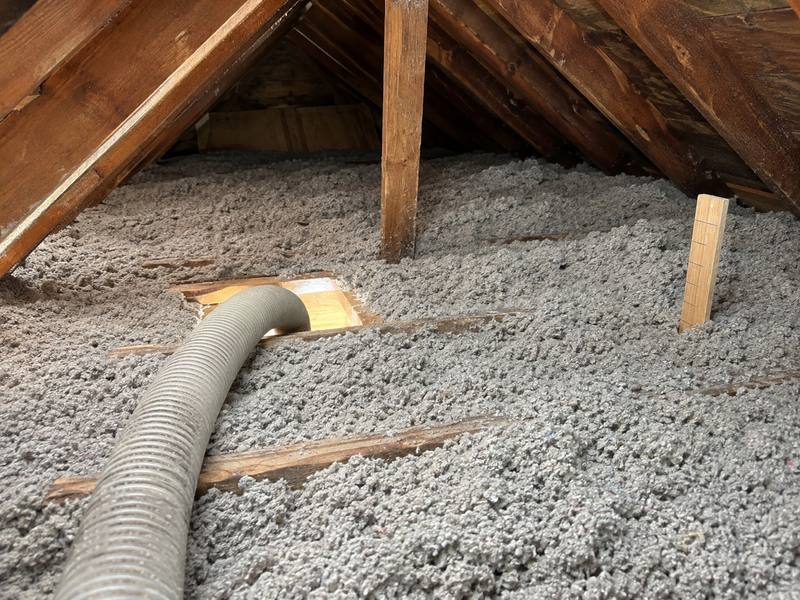
Loose-Fill (Blown-In) Insulation
Learn more
Old Insulation Removal
Learn more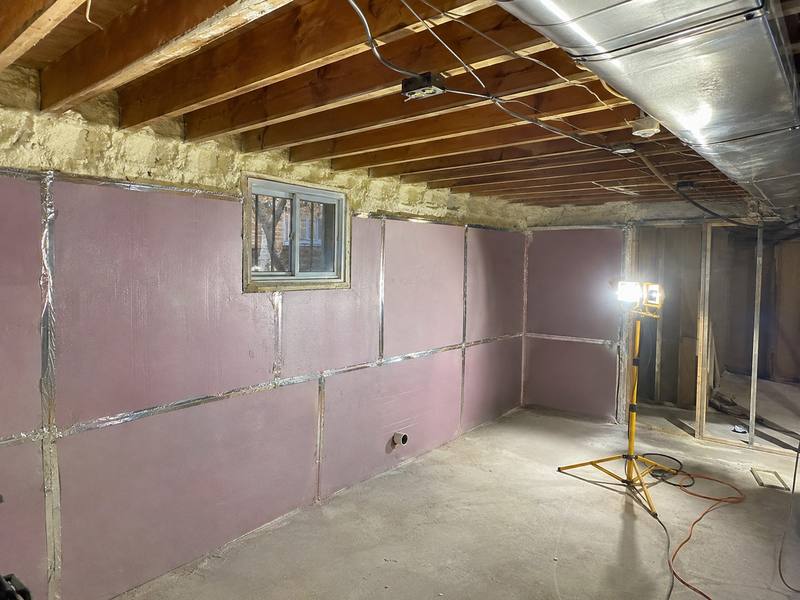
Basement Insulation
Learn more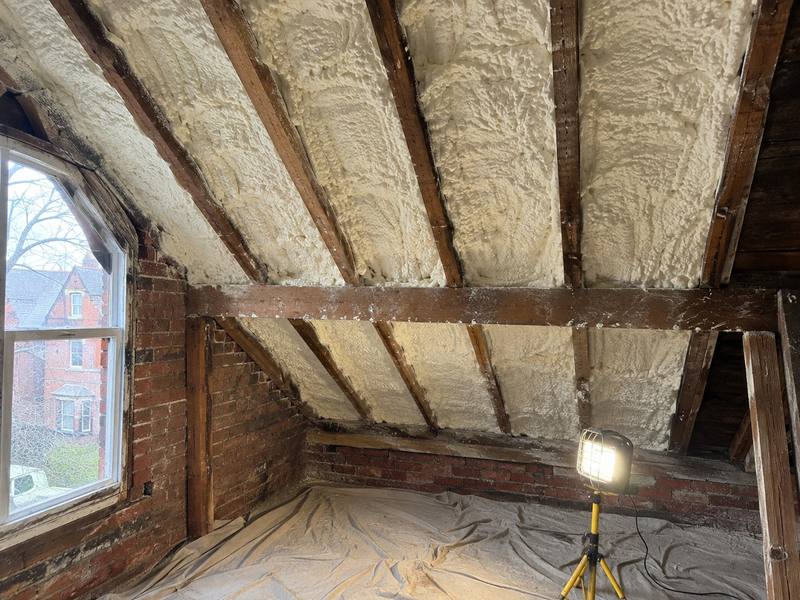
Roof & Flat Roof Insulation
Learn more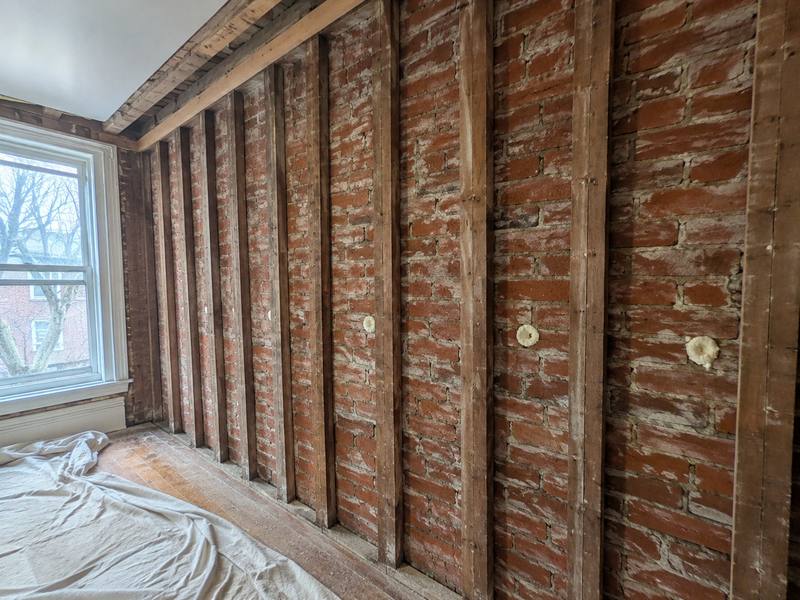
Wall Insulation
Learn more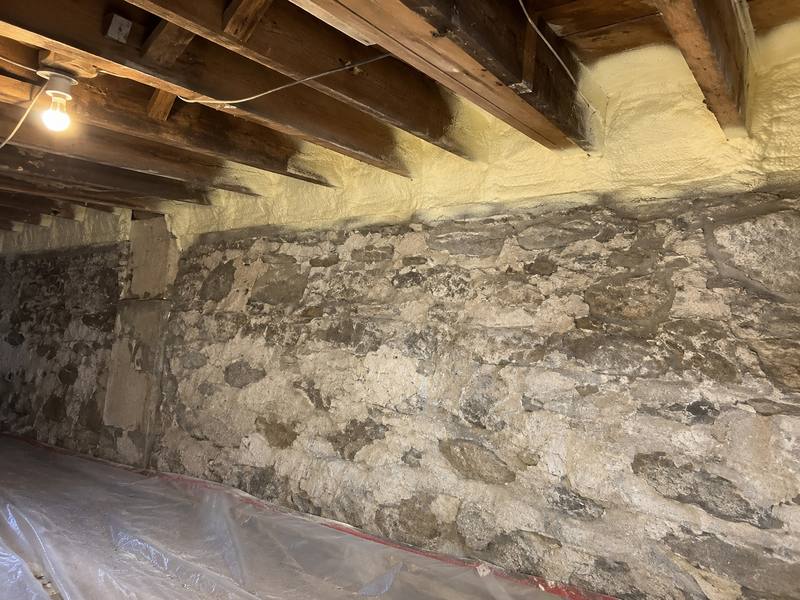
Closed-Cell Spray Foam
Learn more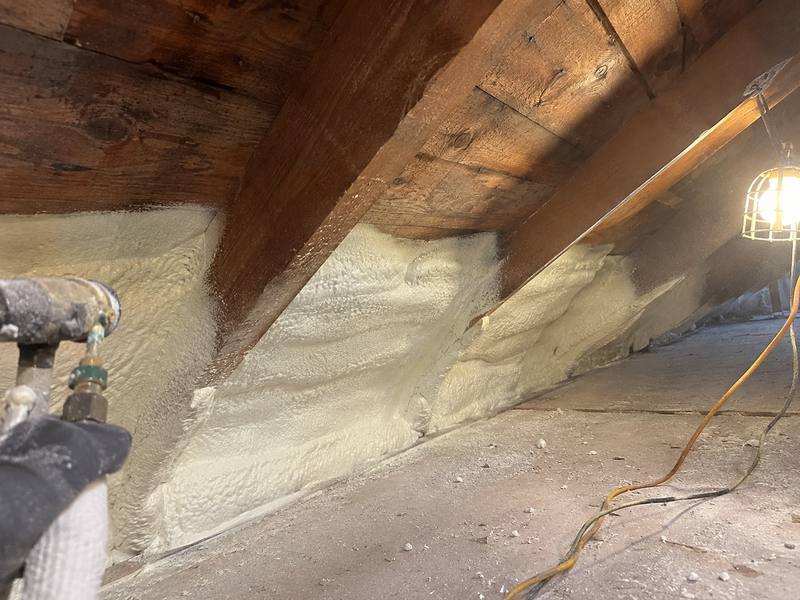
Open-Cell Spray Foam
Learn more
Spray Foam Insulation Cost
Learn more
Get a Quote
Request an insulation visit in Humewood-Cedarvale
Tell us the address and which part of the house bothers you, whether that is a cold top floor, a drafty basement or a ceiling with no attic above it. Phone or use the form. We'll set up a time to look at the house, then give you a written quote.