Spray Foam Insulation in Summerhill, ON
Insulation for the manors of South Hill, the houses of Deer Park and the rest of the M4V area. Foam goes where the house needs foam, and loose-fill goes where loose-fill does the job.
We install spray foam insulation in Summerhill, about 4 km from us. The M4V postal area we cover here includes South Hill, Rathnelly and Deer Park too. We insulate attics, roofs, walls and basements there, and we take out old insulation when it has to go before anything new goes in.
Manors on the South Hill escarpment
South Hill is west of Avenue Road and south of St. Clair Avenue. The steep Davenport Road escarpment runs through it, and so does the Nordheimer Ravine. Large manors went up along the top of the escarpment in the late nineteenth century. If yours is one of the big older houses, there may be more than one attic space under the roof.
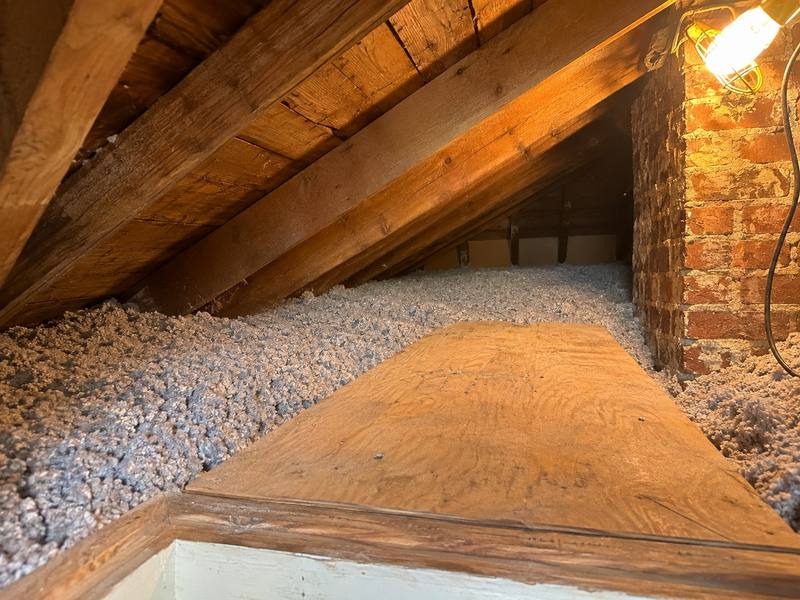
A big house with several roof levels can have three quite different spaces side by side. The open attic floor is the easy one: the joists are exposed, and we can build insulation up over them. A sloped ceiling follows the rafters, so its insulation has to fit inside a closed rafter bay. That means a vent channel with insulation underneath, or closed-cell spray foam, which air seals as it fills. A knee wall is the short wall that closes off the low corner of a top-floor room. Heat leaves through the face of the wall, and also through the floor joists that run behind it out to the eaves.
Each of those spaces needs its own method. Our attic insulation page walks through them. In a South Hill house we treat them as separate spaces, rather than one attic getting one depth of material throughout.
Deer Park around Yonge and St. Clair
Deer Park is centred on Yonge Street and St. Clair Avenue, with the Vale of Avoca along its east side. Writing in 1999, Robert Fulford called it more commercial than its neighbours, a community dominated by apartment dwellers. If you own a house or a low-rise building there, start with the roof and the basement.
Every room or unit shares those two parts of the building. Warm air rises and leaks out through the roof, and cold air gets pulled in down low, at the rim joist where the floor framing sits on the foundation wall. On a flat roof, insulation goes either into the joist bays under the deck or as rigid board on top of it when the roof is next redone. Our roof insulation page explains which makes sense when.
In the basement, we spray closed-cell foam onto the rim joist to stop the draft. It also stops the condensation you get where warm indoor air hits the cold band joist.
Big houses, many separate jobs
In a large house, spray foam insulation goes in the spots nothing else seals well: rim joists, sloped ceilings and knee walls. Closed-cell foam is dense and rigid. A thin layer stops air and moisture both, which is why we use it in tight rafter bays and on the rim joist. Open-cell foam is softer and expands more. It fills odd-shaped cavities well, but in a cold space it needs a separate vapour retarder.
Open attic floors are a different job. We blow loose-fill insulation, cellulose or fibreglass, from a hose across the joists until the depth is even. It settles in around wiring and blocking, where batts tend to leave gaps. Before it goes in, we air seal around chimneys, plumbing stacks and light fixtures. Loose-fill slows heat, but it does nothing to stop moving air.
Foam and loose-fill show up as separate lines on our quote. You can see what each part of the house involves and decide which to do first. If the old attic insulation has been ruined by age or animals, taking it out is a third line, and that happens before anything new goes down.
Close by: The Annex, Church and Wellesley and Forest Hill
Summerhill borders a few other neighbourhoods we work in. Our pages for The Annex, Church and Wellesley and Forest Hill cover the same work in each, plus what's different about the houses there.
Local details for Summerhill
- Postal codes: M4V
- Distance: About 4 km away in a straight line
- Permit rules: toronto.ca
- Nearby: The Annex, Church and Wellesley, Forest Hill
About Summerhill: Summerhill, ON on Wikipedia · Summerhill on Google Maps
FAQ
Insulation questions from Summerhill
One space at a time. Open attic floors get blown-in loose-fill, sloped rafter bays get spray foam, and knee walls get insulated and air sealed together with the floor behind them. Each space loses heat differently, so one method across the whole roof leaves gaps somewhere. The large manors built on the South Hill escarpment in the late nineteenth century can have all of these spaces under a single roof.
Usually both, if the attic has open floor as well as sloped or closed sections. Loose-fill goes on the open floor, because blowing it across a big area is the efficient way to build depth. Foam goes where loose-fill can't fill or seal: rafter bays, knee walls and the rim joist. There it air seals as well as insulates.
No. The city does not require a building permit to add or replace insulation in a Summerhill house, though the work still has to meet the Zoning Bylaw. That goes for attic, wall, roof and basement insulation alike. If the job grows to include other building work, that work is a separate question.
Services
Services in Summerhill, ON
Attic Insulation
Learn more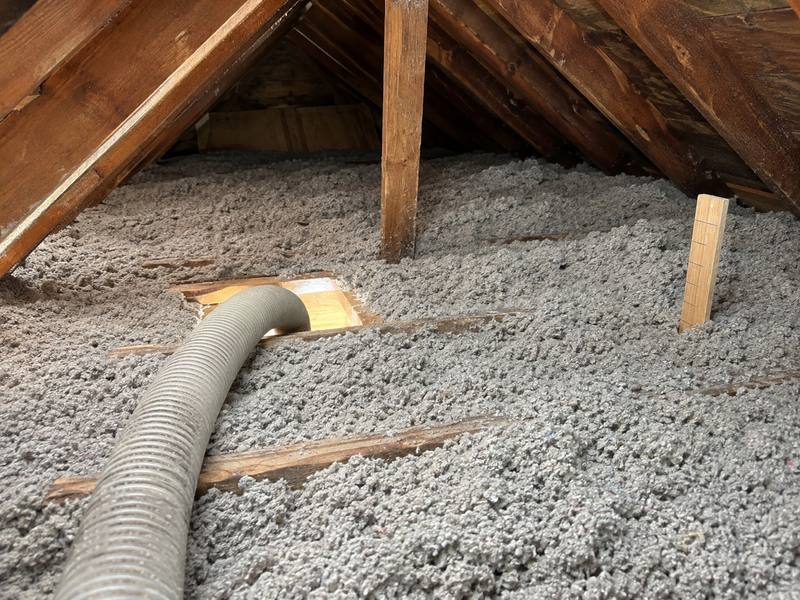
Loose-Fill (Blown-In) Insulation
Learn more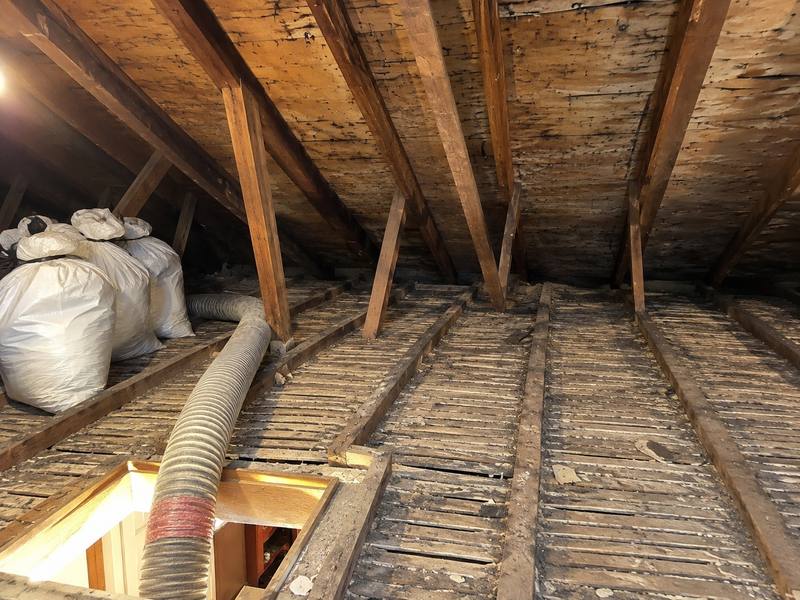
Old Insulation Removal
Learn more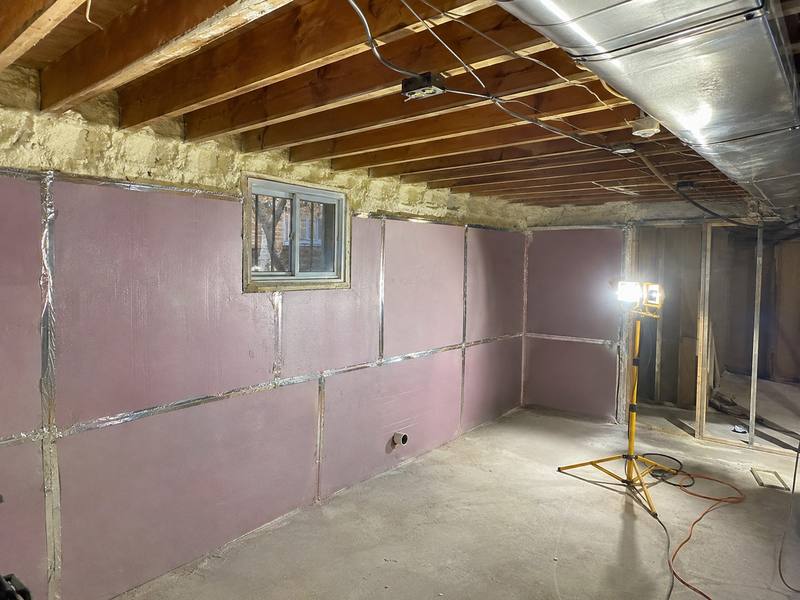
Basement Insulation
Learn more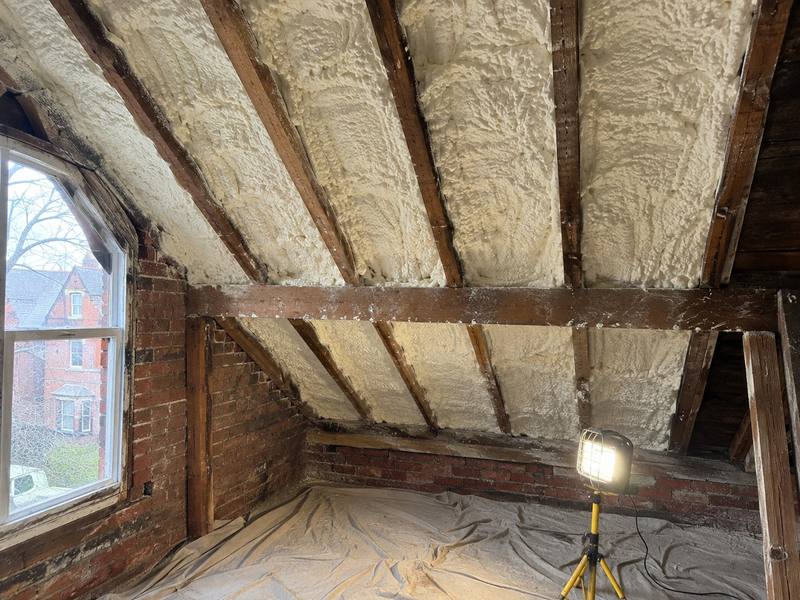
Roof & Flat Roof Insulation
Learn more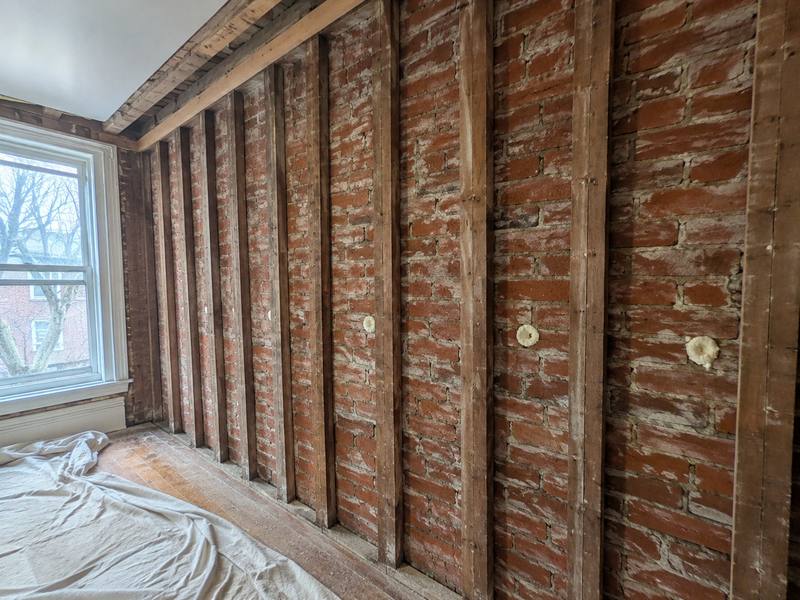
Wall Insulation
Learn more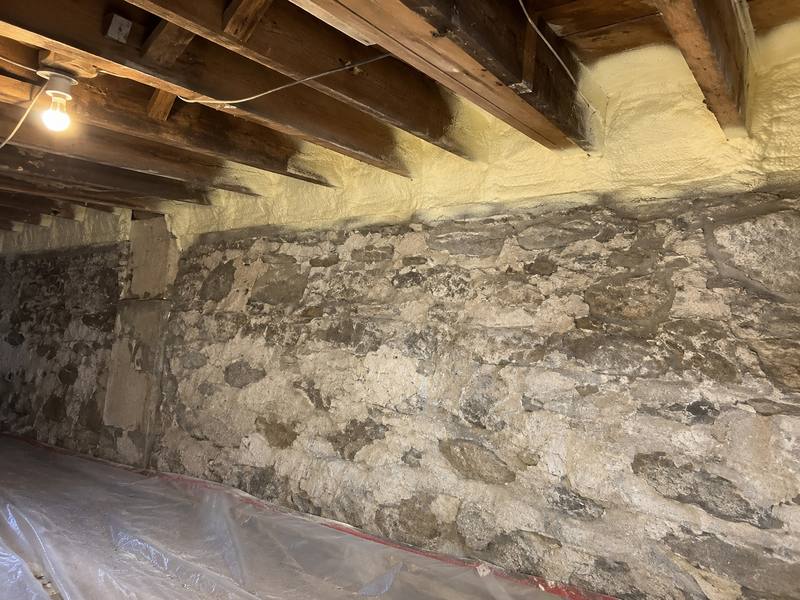
Closed-Cell Spray Foam
Learn more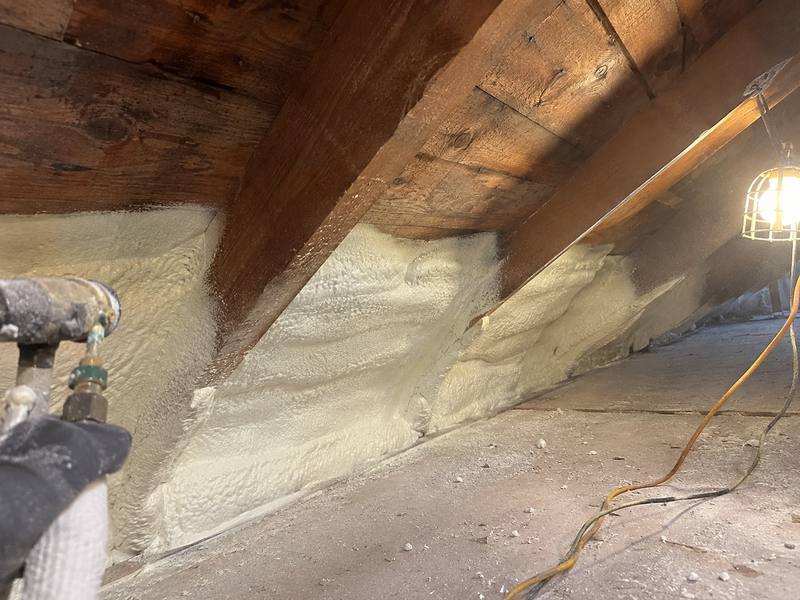
Open-Cell Spray Foam
Learn more
Spray Foam Insulation Cost
Learn more
Get a Quote
Request an insulation visit in Summerhill
Tell us the address and which part of the house bothers you, whether that is a cold top floor, a drafty basement or a ceiling with no attic above it. Phone or use the form. We'll set up a time to look at the house, then give you a written quote.